astronomy

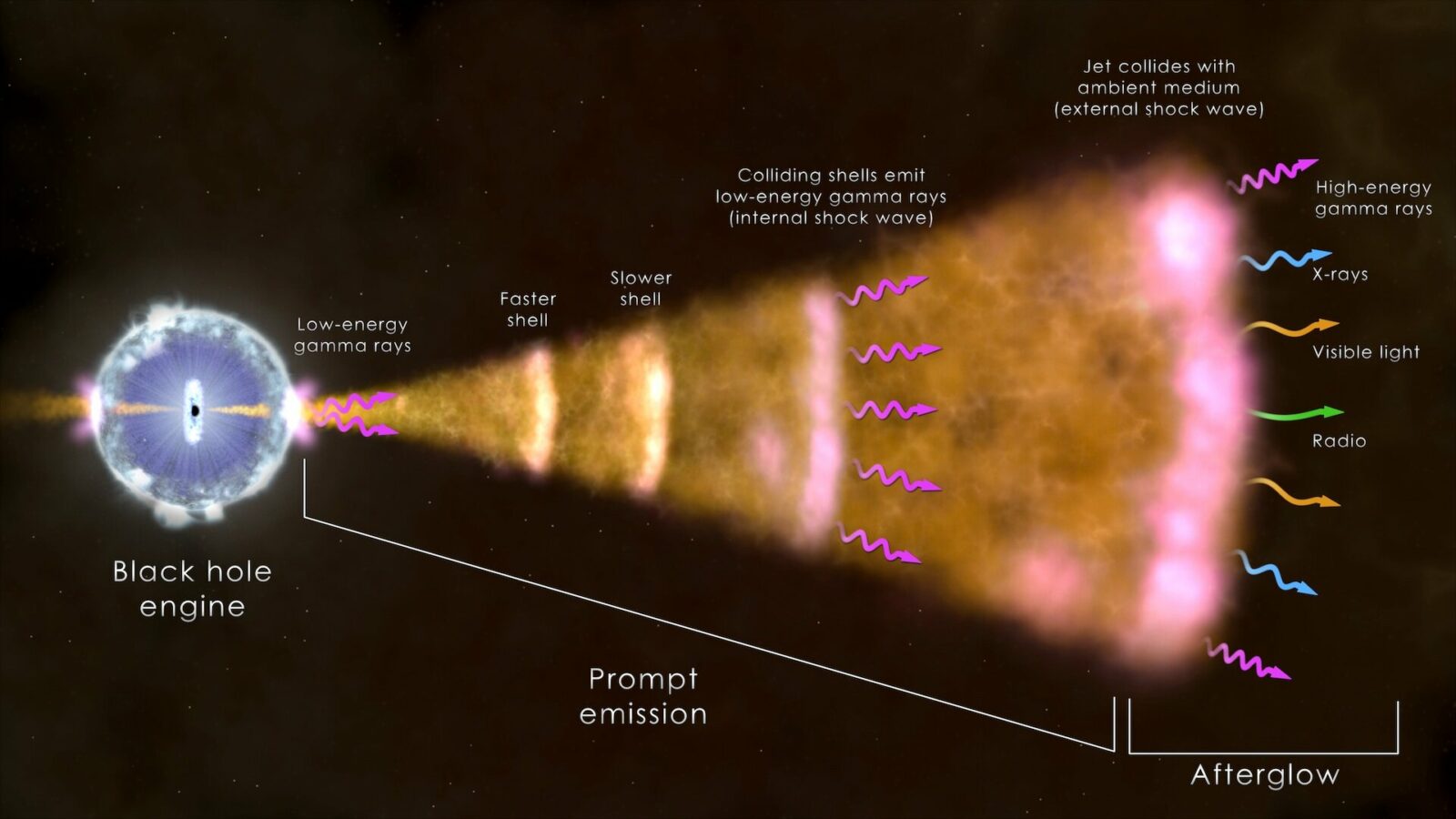
This illustration shows the ingredients of a long gamma-ray burst, the most common type. The core of a massive star (left) has collapsed, forming a black hole that sends a jet of particles moving through the collapsing star and out into space at nearly the speed of light. Radiation across the spectrum arises from hot ionized gas (plasma) in the vicinity of the newborn black hole, collisions among shells of fast-moving gas within the jet (internal shock waves), and from the leading edge of the jet as it sweeps up and interacts with its surroundings (external shock). Credit: NASA's Goddard Space Flight Center

Brightest gamma-ray burst ever observed reveals new mysteries of cosmic explosions

This illustration shows the ingredients of a long gamma-ray burst, the most common type. The core of a massive star (left) has collapsed, forming a black hole that sends a jet of particles moving through the collapsing star and out into space at nearly the speed of light. Radiation across the spectrum arises from hot …

Brightest gamma-ray burst ever observed reveals new mysteries of cosmic explosions Read More »
SKAO and partners advance support for protection of astronomy at UN

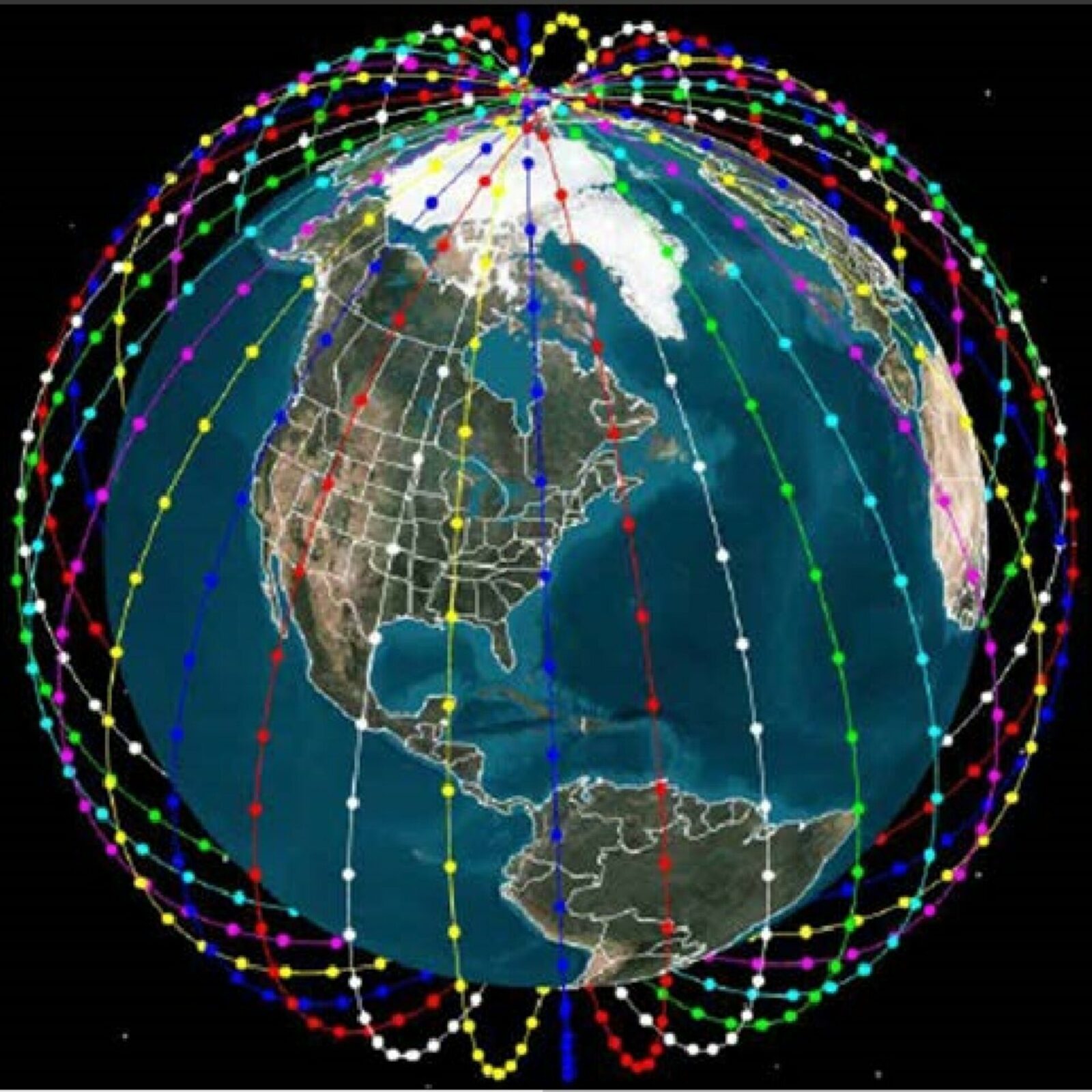
The SKA Observatory (SKAO) and its partners have advanced support for protecting astronomy against the negative impact of satellite megaconstellations at the foremost international forum for space-related matters. During the recently concluded meeting of the scientific and technical subcommittee of the United Nations Committee on Peaceful Uses of Outer Space (COPUOS) in Vienna, the SKAO …

SKAO and partners advance support for protection of astronomy at UN Read More »

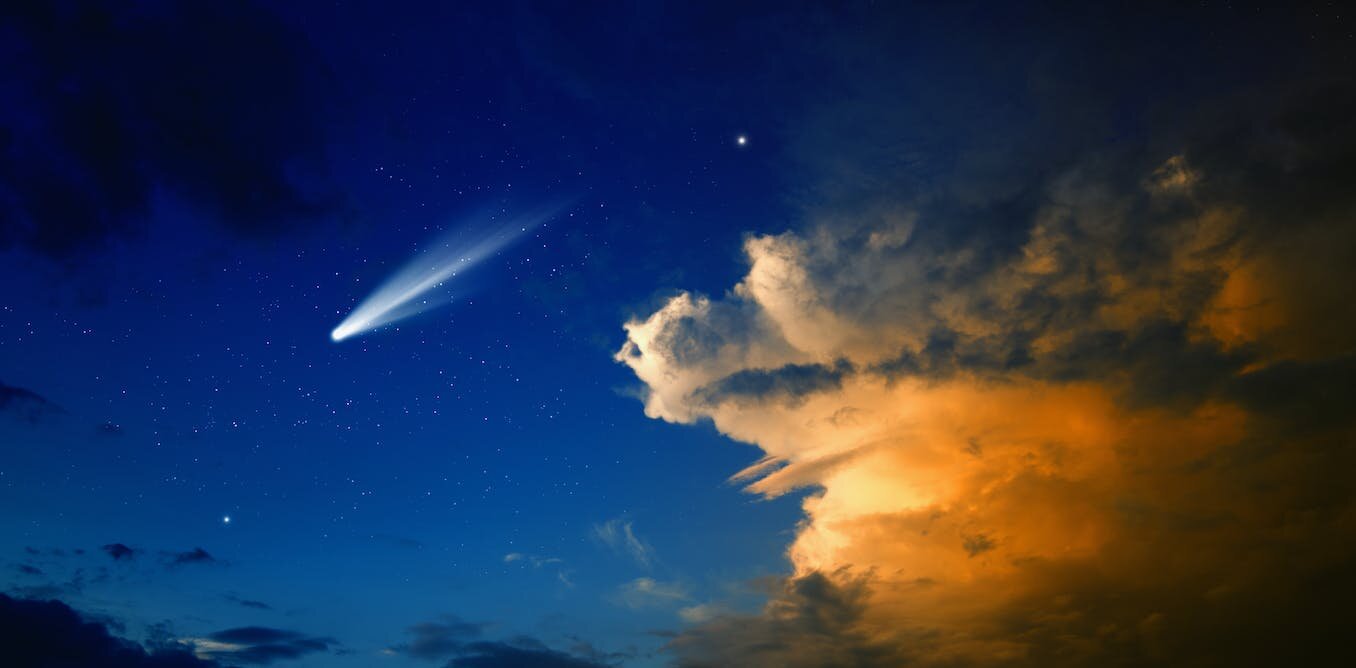
Astronomers just discovered a comet that could be brighter than most stars when we see it next year. Or will it?

Hot on the heels of the disappointing Green Comet, astronomers have just discovered a new comet with the potential to be next year's big story—C/2023 A3 (Tsuchinhan-ATLAS). Although it is still more than 18 months from its clossest approach to Earth and the sun, comet Tsuchinshan-ATLAS already has social media buzzing, with optimistic articles being …

Astronomers just discovered a comet that could be brighter than most stars when we see it next year. Or will it? Read More »

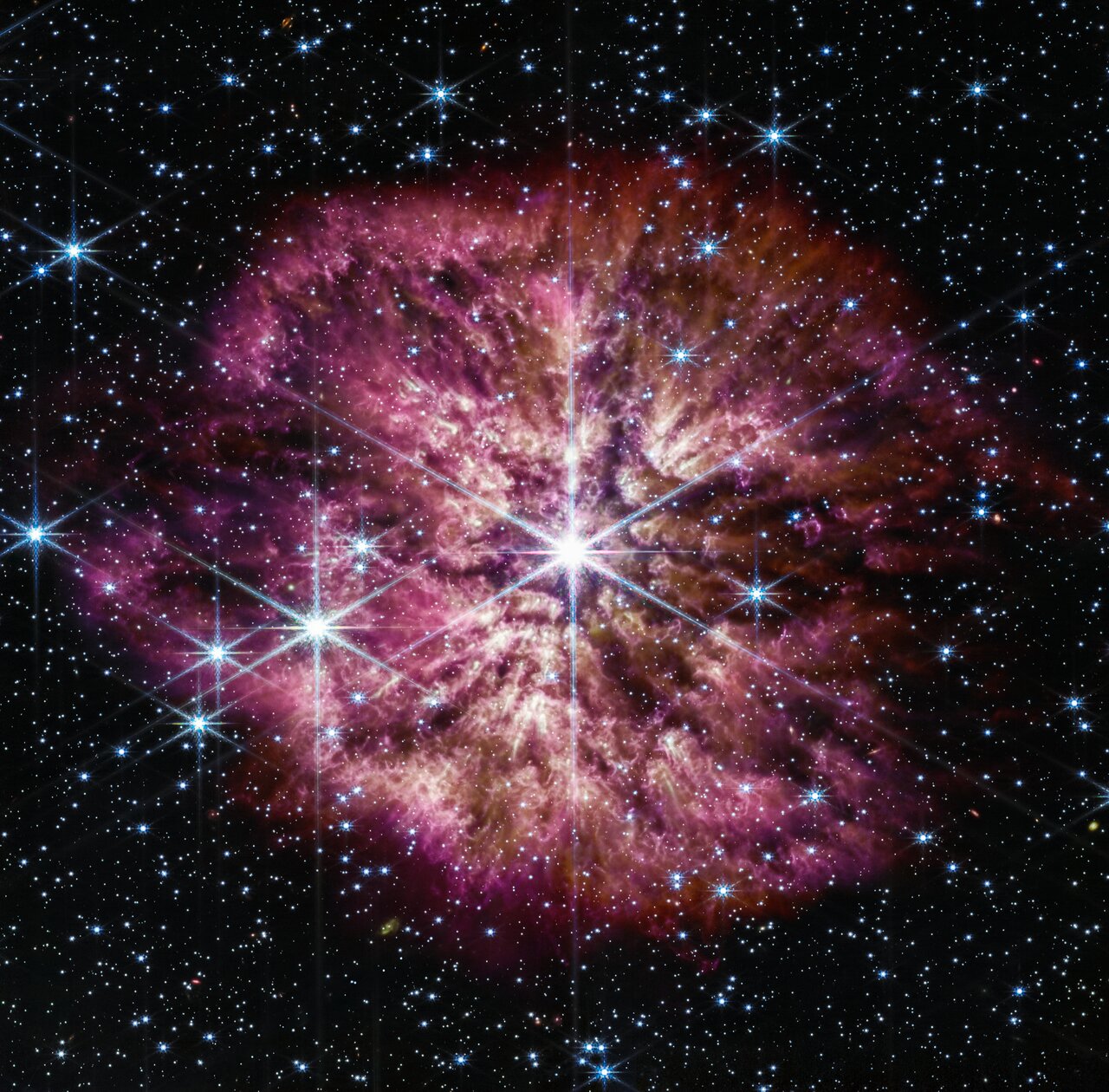
A large, bright star shines from the center with smaller stars scattered throughout the image. A clumpy cloud of material surrounds the central star, with more material above and below than on the sides, in some places allowing background stars to peek through. The cloud material is yellow closer to the star. Credit: NASA, ESA, CSA, STScI, Webb ERO Production Team

Webb captures rarely seen prelude to a supernova

A Wolf-Rayet star is a rare prelude to the famous final act of a massive star: the supernova. As one of its first observations in 2022, the NASA/ESA/CSA James Webb Space Telescope captured the Wolf-Rayet star WR 124 in unprecedented detail. A distinctive halo of gas and dust frames the star and glows in the …

Webb captures rarely seen prelude to a supernova Read More »

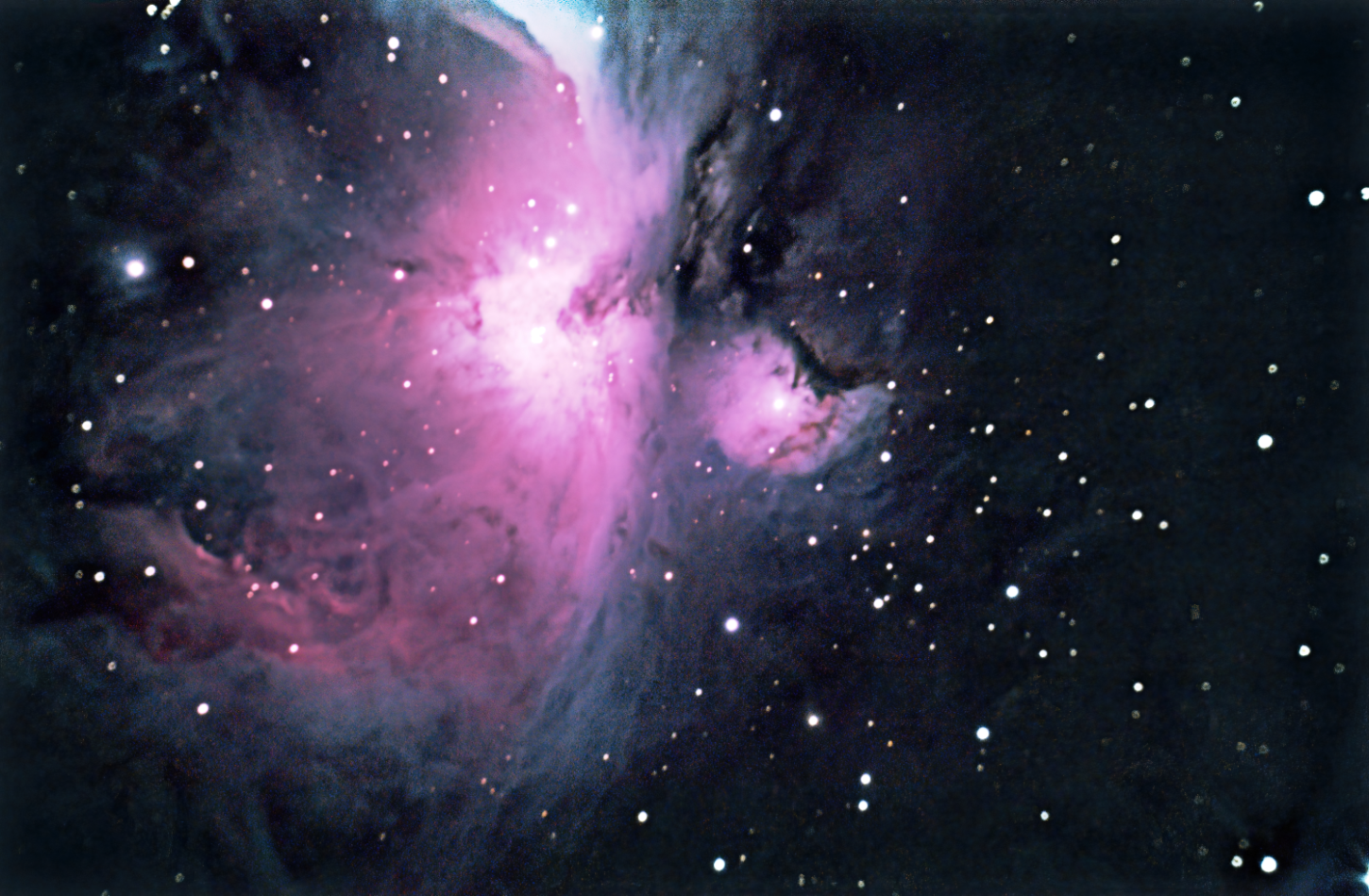
M42 Orion Nebula Prime Focus Image by Deon Krige

This was a first attempt at a prime focus image (camera directly connected to his telescope) of the Orion Nebula M42 by Hermanus Astronomy member Deon Krige. Here is his fact sheet and comments: "Setup ; Meade telescope LX50 10” F10 Schmidt Cassegrain. Original no Go-To mount. Camera Canon 760D with Focal Reducer 6.3 Prime …

M42 Orion Nebula Prime Focus Image by Deon Krige Read More »